
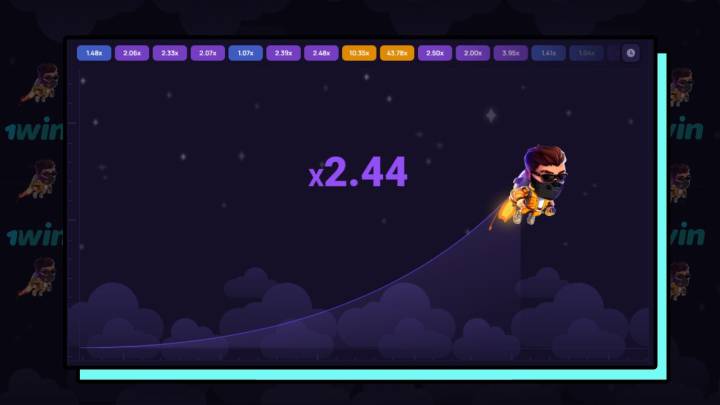
I enjoy games that get the importance of visuals. A great game goes beyond aesthetics; it creates a world that captures you the moment it opens. That's the experience I undergo with Lucky Jet. The game's art is a clever mix of kinetic action and striking aesthetics, making something that's both engaging to play and beautiful to look at. This ongoing improvement in presentation is a major part of its appeal, creating a environment that's as enjoyable to watch as it is to play.
The Launchpad: From Functional to Fantastic

Any visual adventure begins somewhere, and Lucky Jet's early days are all about intelligent, functional decisions. The first version of the game made clarity a priority. The developers recognized that a game about a character soaring upward with live multipliers needed a crystal-clear screen. They opted for clean lines, a distinctive color scheme to highlight the pilot, and big, legible numbers. This setup guaranteed the main action was always clear, proving that appealing aesthetics start with excellent legibility.
Prioritizing the Player's Eye
The initial designs were built to direct your gaze. The figure had just enough charm to be appealing, but not excessive detail that it cluttered the view. Backgrounds employed subdued tones and uncomplicated motifs so the foreground action always demanded focus. This careful layering of visuals enabled players to make quick choices without scanning the whole display. It was a design that matched the game's tempo and the player's requirement for an uncluttered screen.
Character Creation: Greater Than Just a Pilot
The little aviator is the icon of the game. It started as a simple game piece, but has acquired real character. We've observed special costumes for holiday events, which adds a fun layer of collectibility. The animation work is more sophisticated, giving the pilot small idle movements and reaction twitches that suggest a personality. These details forge a connection between the player and the pixelated figure on the screen.
This focus on the character does far more than just look good. A strong protagonist gives you a reason to cheer. When the pilot takes off, that sensation of risk and reward has a face. Every part of the design, from the focused look to the shape of the jetpack, sells the ideas of speed and cheerful adventure. Changing from a simple game token to a memorable mascot is a big part of what makes the visuals stick with you.
Color Science and Aerial Depth
Consider the game's colors. Nothing here is coincidental. The designers employ color theory with a light hand. The main interface leans on blues and purples, hues we connect with stability and tranquility. This builds a soothing visual backdrop. That calm backdrop forces the brilliant orange and yellow tones of the jet and its multiplier line jump off the screen, attracting your gaze right to the core of the action.
Building a Believable Universe
This clever color approach also creates a spatial sense. By shading backdrops in cooler and softer tones and reserving warm and vivid colors for interactive parts, the game creates a believable depth perception. This layering serves a purpose beyond aesthetics. It helps your perception quickly separate the gameplay from the environment, allowing you process the movement faster and reinforce the feeling of soaring through the air.
The Animation: The Soul of the Game
Think of the visuals as the core. The animation is the soul. This is where Lucky Jet Game Jet's visual style springs to life. The fluid, speeding ascent of the character is essential; a stutter would destroy the magic. However the real cleverness is in the finer details. The multiplier glinting, the minor screen bump when you cash out, the small burst after a successful round. These elements are the on-screen reactions that create the game feel reactive and vibrant.
Each animated element has two jobs: to please the eye and to give you information. The expanding path behind the pilot is a real-time chart of your maximum prize. Figures that enlarge and brighten help you grasp the risks without straining to read. This combination of visual appeal and function in movement converts a simple game feature into a compelling visual show.
The Flow of Development: Major Visual Enhancements
The game's visuals have become more refined over the years. The changes I've observed represent a genuine improvement in refinement and ambiance. The character's animations have become more elaborate and seamless, providing its upward movement with true heft and drive. The multiplier track received an enhancement as well, incorporating particle effects and sleeker graphics that make the climbing figures appear robust and dynamic. These updates immerse you further into the game's flow.
The scenery has been completely reworked. What previously were plain fixed graphics now seem like genuine environments. You will observe minor enhancements, like clouds moving slowly, elements moving as you navigate, and lighting altering to indicate various periods of the day. This surrounding detail does not hinder the game. On the contrary, it surrounds the central activity in a realm that seems more like a location than a graphic. It reveals a group devoted to perfecting every element on the screen.
Creating a Harmonious Visual World
Stunning elements are lost without unity, and this is where the game's art direction stands out. From the lobby to the main interface, a uniform visual design ties everything together. The fonts are contemporary, sleek, and friendly, matching the game's welcoming yet exciting mood. Each icon share the same streamlined, sleek feel, mirroring the curves of the jet pack. This coherence creates a strong, credible brand that gamers identify.
This unified world appears also in special events. For time-limited competitions, the interface gets a thoughtful makeover. These are meticulous overhauls with fresh color schemes and pilot equipment that don't disrupt the main layout. It maintains excitement for frequent players and demonstrates a commitment to world-building, converting one game into a dynamic visual environment.
The Future of Flight: Anticipating Visual Trends
Considering the path so far, the visual future for Lucky Jet is bright. I expect to see more ways for players to personalize the experience, maybe by customizing jet trails or pilot outfits. Introducing more advanced lighting, like dynamic shadows or soft rain effects, could generate amazing new layers of depth. We might even see bits of story integrated, with short animated clips or backgrounds that change as you advance.
The room for subtle 3D effects is huge, delivering a stronger sensation of depth and velocity. As screen technology gets better, the art can develop for sharper resolutions and smoother performance. The trick will be blending these new ideas with the game's core strength: absolute clarity. The developers have shown they know this balance, which points to a future where the game holds onto its spot as a visual standout.
Following Lucky Jet's art evolve has been a treat. It demonstrates how thoughtful design, rooted in usability and boosted by creative energy, can turn a clever game mechanic into a memorable event. From its clean, simple start to its lively current state, every dot on the screen works to build excitement and shape a space players want to return to. This progression makes one thing clear: great visuals aren't just wallpaper. They are a essential part of what makes a game engaging and fun.